Cylinders bundle
Hydrogen embrittlement
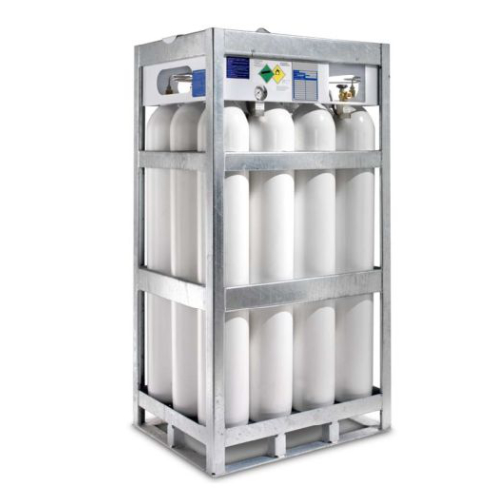
Ordinary bundle
- Working pressure – 200 bar;
- Single cylinder volume – 50 l;
- Bundle volume (12 cylinders) – 600 l;
- Empty cylinder weight – 46 kg;
- Hydrogen volume in the bundle – 104 m3;
- Hydrogen weight in the bundle – 8,7 kg;
- Filled cylinders weight – 659 kg.
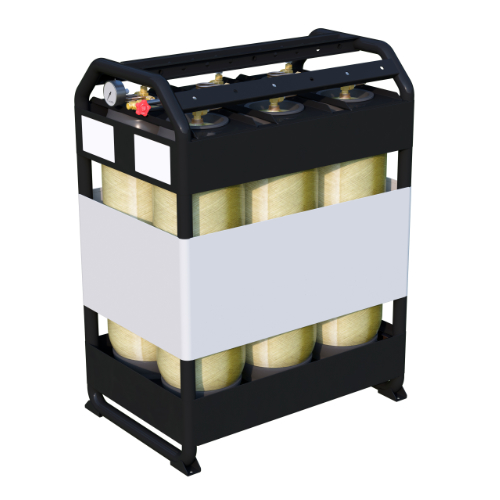
Vinte bundle
- Working pressure – 450 bar;
- Single cylinder volume – 98,5 l;
- Bundle volume (6 cylinders) – 591 l;
- Empty cylinder weight – ~33,5 kg;
- Hydrogen volume in the bundle – 203 m3;
- Hydrogen weight in the bundle – 17,0 kg;
- Filled cylinders weight – 358 kg.
- Less cylinders number – lower maintenance costs;
- 2 times higher gas volume;
- 46% lower system weight – lower logistics costs;
- Capability for logistic robotization.
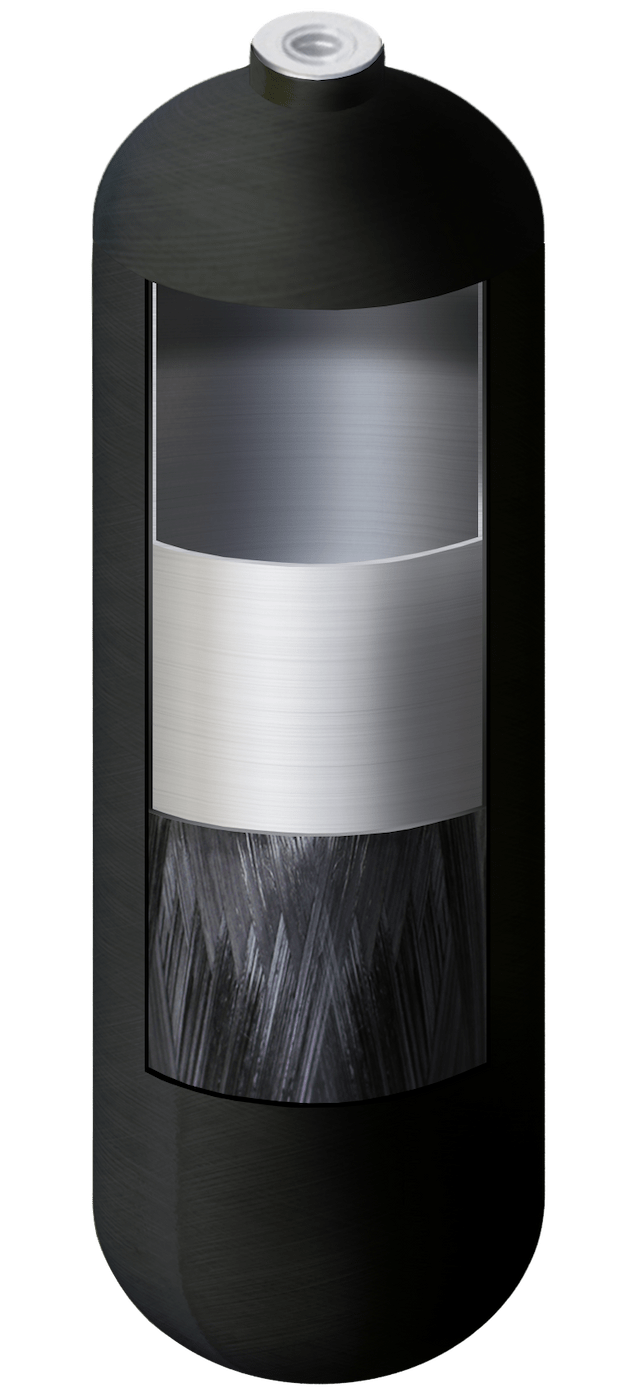
Cylinder design
1
2
3
Aggressive gases resistance
According to ISO11114-1 the aluminum in not allowed for certain range of products,
but stainless steel option perfectly fit with this regulation.
| Gas number Name Formula |
Key compatibility characteristics | Materials | |||
|---|---|---|---|---|---|
| Cylinder | Valve | ||||
| A | NR | A | NR | ||
| 20 CHLORINE Cl2 |
Hydrolyses to hypochlorous acid and to hydrogen chloride in contact with moisture. In wet condition see specific risk of hydrogen chloride compatibility i.e. severe corrosion of most of the materials and risk of hydrogen embrittlement. Risk of violent reaction with AA. | NS QTS SS |
AA | B CS SS |
AA |
| 22 CHLOROMETHANE CH3Cl (R40) |
In the presence of water, slight rick of corrosion. Risk of violent reaction with AA. | NS QTS SS |
AA | B CS SS |
AA |
| 35 DICHLOROSILANE SiH2Cl2 |
Hydrolyses to hydrogen chloride in contact with moisture. In wet condition see specific risk of hydrogen chloride compatibility i.e. severe corrosion of most of the materials and risk of hydrogen embrittlement. | QTS NS SS |
AA | B SS CS |
AA |
| 49 FLUORINE F2 |
Hydrolyses to hydrogen fluoride in contact with moisture. In wet condition see specific risk of hydrogen fluoride compatibility i.e. severe corrosion of most of the materials and risk of hydrogen embrittlement. Risk of violent reaction with AA. Recommended materials are also Monel and nickel. | QTS NS SS |
AA | B CS SS |
AA |
Advantages

Fire safety

Explosion safety

Resistance to oxidizing

Corrosion resistance

Resistance to toxic materials